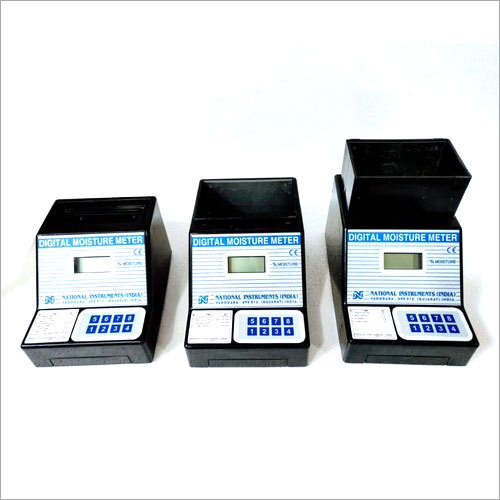
3 Types Digital Moisture Meter About
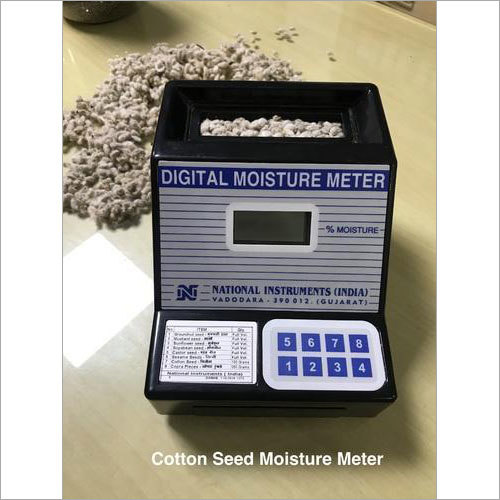
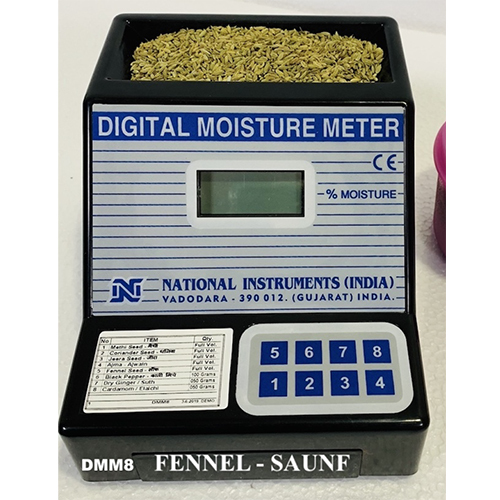
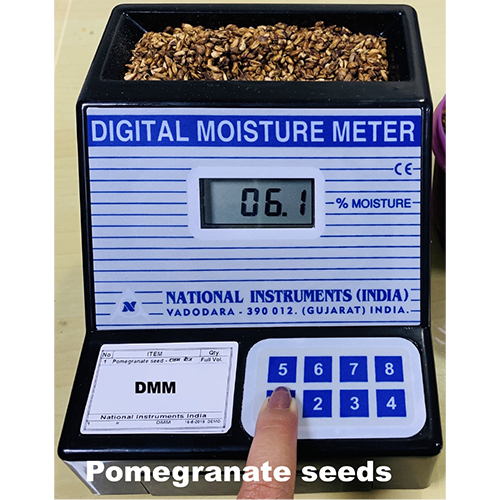
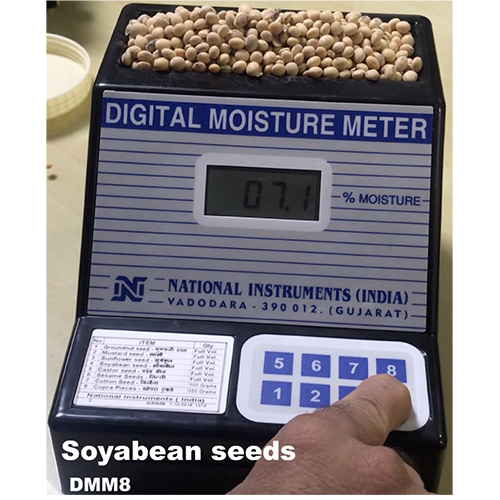
3 Types Digital Moisture Meter provided by us, is designed and manufactured by making use of the latest technologies under the supervision of our skilled workers. Internally, it uses high-precision electron components to measure the moisture value on over a hundred different types of common wood.Apart from this, 3 Types Digital Moisture Meter is very easy to use and simple to handle. Objects used to test water content include wood ware, bamboo ware, cotton, tobacco, paper, cartons, medicinal products, and so on.
Technical Specifications
|
Weight
|
Less than one kg
|
|
Type
|
Digital Grain Moisture Meter,Digital Moisture Meter
|
|
Moisture Range
|
0% to 40%
|
|
Usage/Application
|
Measurement of % moisture in food grains
|
|
Battery
|
Four Pencil Cells
|
|
Brand
|
National Instruments India
|
|
Warranty
|
1 Year
|
|
Accuracy
|
0.2 %
|
|
Display Type
|
Digital
|
|
Analysis Time Approx
|
One sample per minute
|
Versatile Moisture MeasurementDesigned to accurately gauge moisture in a broad array of materials, including wood, concrete, soil, grain, and paper, these meters provide flexibility for agricultural, construction, and research applications alike. The three sensor optionsPin, Non-contact, and Cupallow for tailored testing on single or bulk samples, whether in the field or laboratory.
User-Centered FeaturesWith their ergonomic handheld design, our meters offer a bright backlit LCD, programmable alarm, auto power off, and low battery notifications. The intuitive control mode (digital/manual) and calibrated accuracy ensure both ease of use and highly reliable data, making them suitable for professionals and advanced hobbyists alike.
Durable and Reliable for Demanding TasksConstructed with robust ABS housing to withstand tough environments, these moisture meters thrive indoors or outdoors, operating across a wide temperature and humidity range while protected by overload and short-circuit safeguards. Their lightweight design and up to 100-hour battery life optimize portability and ensure dependable results wherever work takes you.
FAQs of 3 Types Digital Moisture Meter:
Q: How do the different sensor types work in these moisture meters?
A: Pin-type meters use contact probes that are inserted into the material to measure moisture directly. Non-contact models scan the surface using electromagnetic fields for non-destructive testing, while cup-type meters are designed to test moisture in powders, seeds, and grain by placing a sample in the provided cup.
Q: What materials can these digital moisture meters measure?
A: These meters are compatible with wood, concrete, grain, soil, and paper. Each model is crafted to deliver optimum results depending on the sensorpin-type excels with solid surfaces, cup-type handles granular materials, and non-contact offers rapid scanning for fragile or hard-to-penetrate materials.
Q: When should I calibrate or check my meter?
A: Each meter is factory calibrated for accuracy. However, manual calibration checks are recommended periodically or before critical measurements, especially after extended use or storage, to ensure ongoing precision.
Q: Where can these meters be used safely?
A: Thanks to their durable ABS housing and protective features, the meters are safe for both indoor and outdoor applications. They are engineered to operate in temperatures between 0C and 50C and handle humidity levels from 5% to 95% RH.
Q: What is the process for measuring with each sensor type?
A: For pin-type meters, insert the probes into the material. With non-contact models, place the sensor flush against the surface for scanning. Cup-type meters require filling the test cup with the material, then securing and activating the reading. All processes yield results in about a second.
Q: What are the key benefits of using these digital moisture meters?
A: Users benefit from instantaneous, accurate readings (0.5%1%), a wide measuring range (0%99%), programmable alarms for moisture limits, robust protection features, and a convenient ergonomic design ideal for field and lab use.
Q: How does the programmable alarm function improve safety and efficiency?
A: The programmable alarm lets users set specific moisture thresholds. If the measured value exceeds or falls below this level, the device will alert the operator, ensuring rapid responses to potential quality or safety issues in materials being tested.






 Send Inquiry


 Send Inquiry
 Send Inquiry
 Send SMS


